Date July 22, 2025
Category
You’ve been nurturing your tree with care and patience, yet it seems stuck in a growth standstill. This frustrating situation affects many homeowners who expect their trees to thrive but instead witness minimal development year after year. Understanding why your tree isn’t growing requires examining several key factors that influence tree development. From soil conditions to improper planting techniques, various elements can hinder your tree’s growth potential. In this comprehensive guide, we’ll explore the common reasons behind stunted tree growth and provide practical solutions to help revive your struggling tree. Whether you’ve recently planted a new sapling or have an established tree that’s stopped growing, these insights from the experts at TreeNewal will help you identify issues and implement effective remedies.
Improper Planting Techniques That Stunt Growth
One of the most common reasons trees fail to grow properly begins at planting time. When trees are planted incorrectly, they face an uphill battle from day one. The planting hole’s size and depth play crucial roles in establishing a healthy root system. Many homeowners make the mistake of digging holes that are too small or too deep.
A proper planting hole should be two to three times wider than the root ball but only as deep as the root ball itself. When planted too deeply, the tree’s root collar (the area where the roots meet the trunk) gets buried, leading to oxygen deprivation and root suffocation. Conversely, if planted too shallowly, roots may become exposed and dry out.
Another common planting error is failing to break up the root ball before planting. Trees grown in containers often develop circling roots that, if left untreated, continue to grow in a circular pattern rather than extending outward into the surrounding soil. This condition, known as girdling roots, restricts water and nutrient uptake.
The timing of planting also impacts initial growth. Fall and early spring generally provide ideal conditions for establishing new trees, allowing root development before extreme temperature stress occurs. Summer plantings often struggle with heat stress and increased water demands.
If you suspect your tree was improperly planted, consider consulting with professional TreeCare services to determine if remedial action such as replanting at the correct depth would benefit your tree.
Soil Quality Issues Affecting Tree Growth
Poor soil conditions rank among the top reasons trees struggle to grow. Trees require soil that provides adequate nutrition, proper drainage, appropriate pH levels, and sufficient space for root expansion.
Compacted soil presents a significant challenge for tree growth. When soil particles are pressed tightly together – often from foot traffic, construction equipment, or heavy clay content – roots struggle to penetrate the dense soil. This limits their ability to access water and nutrients while restricting oxygen availability to root tissues. Compaction essentially creates a physical barrier to root growth, resulting in stunted overall development.
Soil nutrient deficiencies can similarly hamper growth. Trees require various macro and micronutrients, including nitrogen, phosphorus, potassium, calcium, and magnesium. When these elements are lacking, trees may exhibit yellowing leaves, reduced leaf size, or minimal new growth. Different nutrient deficiencies cause distinct symptoms:
- Nitrogen deficiency: Overall yellowing of leaves, particularly older leaves
- Phosphorus deficiency: Purple discoloration of leaves, stunted growth
- Potassium deficiency: Browning leaf margins, weak branches
Improper soil pH also impacts nutrient availability. Most trees prefer slightly acidic to neutral soil (pH 5.5-7.0), though this varies by species. When soil pH is too high or too low, certain nutrients become chemically bound and unavailable to the tree, despite being physically present in the soil.
To address soil issues, consider conducting a soil test through your local extension office. Based on the results, you might need to amend the soil with organic matter, adjust pH with lime or sulfur, or implement a targeted fertilization program specific to your tree’s needs and TreeNewal can help you develop an appropriate plan.
Insufficient Water and Drainage Problems
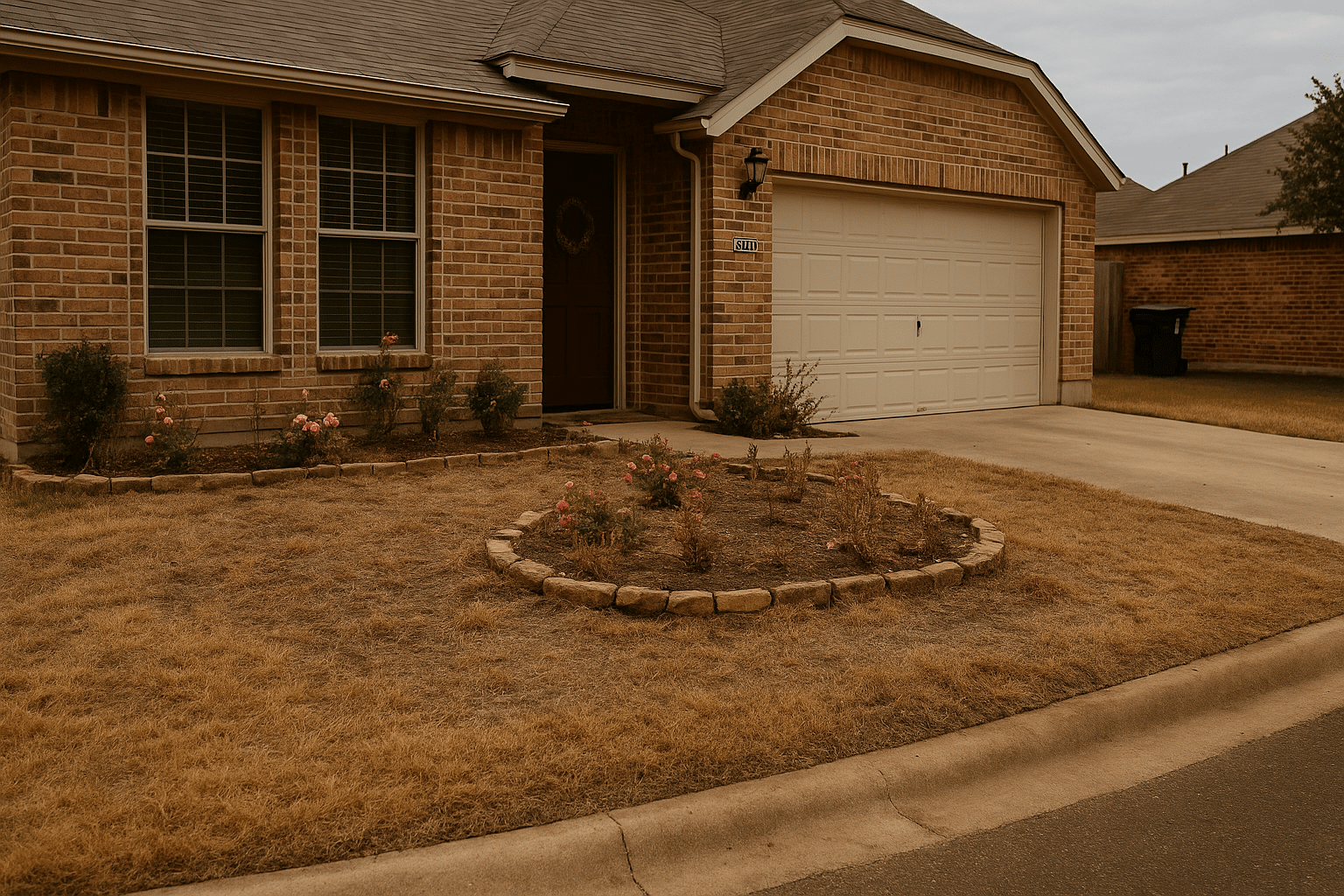
Water management problems – either too much or too little – frequently cause growth stagnation in trees. Finding the right balance is essential for healthy development.
Underwatering creates drought stress that limits photosynthesis and restricts the tree’s ability to produce energy for growth. Signs of insufficient water include wilting leaves, leaf scorch (browning along edges), premature fall color, and leaf drop. Young trees are particularly vulnerable to drought stress as their root systems haven’t yet developed extensively enough to access deeper water sources. During establishment (typically the first 2-3 years), consistent watering is critical.
Conversely, overwatering and poor drainage can be equally detrimental. Saturated soils displace oxygen in soil pores, effectively drowning tree roots. Without adequate oxygen, roots cannot perform respiration and begin to die back. This root damage manifests as yellowing leaves, fungal issues, and minimal new growth. Clay soils are particularly prone to drainage problems.
In 2023, a study published in the Journal of Arboriculture found that improper irrigation was responsible for approximately 38% of urban tree growth failures. This underscores the importance of appropriate watering practices.
To determine if drainage is an issue, perform this simple test: Dig a hole about 12 inches deep near your tree and fill it with water. If the water hasn’t drained within 24 hours, you likely have drainage problems that need addressing through techniques like installing drainage systems, creating raised planting beds, or amending the soil with organic matter to improve structure.
For established trees experiencing drought stress, deep, infrequent watering is generally more beneficial than frequent shallow watering. This encourages roots to grow deeper in search of moisture, creating more resilient trees over time. Consider using a soaker hose or drip irrigation system that delivers water slowly to minimize runoff and maximize absorption.
Pest and Disease Impact on Tree Growth
When trees mysteriously stop growing, pests and diseases often play a significant role. These biological stressors divert a tree’s energy from growth to defense and recovery.
Insect pests harm trees through various mechanisms. Defoliating insects like caterpillars and beetles consume leaves, reducing the tree’s photosynthetic capacity. Boring insects like emerald ash borer and pine beetles tunnel through vascular tissues, disrupting water and nutrient transport. Sap-feeding insects such as aphids, scale, and adelgids extract nutrients directly from the tree, weakening it over time.
Disease pathogens similarly compromise tree health through various pathways. Fungal diseases like anthracnose and powdery mildew affect leaf function. Root rot diseases attack below ground, destroying critical root tissue. Vascular diseases like oak wilt and Dutch elm disease block water-conducting tissues, essentially causing internal drought conditions.
Signs your tree’s growth issues might be pest or disease-related include:
- Discolored, misshapen, or damaged leaves
- Visible insects or evidence of feeding
- Cankers, oozing, or unusual growths on branches or trunk
- Premature leaf drop
- Dieback starting at branch tips and progressing inward
Early identification and intervention are critical for managing pest and disease issues. Treatment options vary widely depending on the specific problem but may include targeted pesticide applications, pruning affected areas, improving tree vitality through proper care, or implementing biological controls.
Regular monitoring helps catch problems early when they’re easier to address. Consider consulting with a certified arborist who can provide accurate diagnosis and treatment recommendations tailored to your specific situation and tree species.
Environmental Stressors Limiting Tree Growth
Trees face numerous environmental challenges that can significantly hinder their growth potential. Understanding these stressors helps explain why a seemingly healthy tree might struggle to develop properly.
Temperature extremes place considerable stress on trees. Unexpected late spring frosts can damage new growth, effectively setting back the growing season. Heat stress during summer months increases water demands and can slow metabolic processes. The 2021-2022 winter storm that affected Texas caused unprecedented damage to many tree species, with lingering growth impacts still observed years later. Climate change continues to introduce more frequent temperature fluctuations that disrupt normal growth patterns.
Light competition represents another common environmental limitation. Trees require adequate sunlight for photosynthesis, the process that converts light energy into chemical energy used for growth. When trees are planted too close together or near structures that cast significant shade, they receive insufficient light to power optimal growth. Different tree species have varying light requirements – shade-tolerant species like dogwoods can manage with less direct sunlight than light-demanding species like pines or oaks.
Urban growth constraints also impact tree development. Trees growing in confined urban spaces often encounter restricted root zones due to pavement, utilities, and foundations. A tree’s root system typically extends 2-3 times the width of its canopy, but urban environments rarely accommodate this natural growth pattern. Limited soil volume restricts access to water and nutrients while creating stability concerns as the tree matures.
Air pollution in urban and industrial areas can damage leaf tissues and interfere with photosynthesis. Pollutants like ozone, sulfur dioxide, and particulate matter enter leaf stomata and create cellular damage. While trees help clean air pollution, excessive exposure diminishes their health and growth potential.
To mitigate environmental stressors, consider the following approaches:
- Select tree species well-adapted to your specific climate and site conditions
- Provide temporary shade or protection for young trees during extreme weather events
- Position trees where they’ll receive appropriate light levels for their species
- Maximize available soil volume when planting in urban environments
- Maintain consistent care practices to help trees better withstand environmental challenges
Nutritional Deficiencies and Improper Fertilization
Nutrient management plays a crucial role in tree growth, with both deficiencies and improper fertilization potentially causing growth problems. Trees require a balanced diet of macro and micronutrients to support various physiological processes.
Macronutrients (needed in larger quantities) include nitrogen, phosphorus, potassium, calcium, magnesium, and sulfur. Micronutrients (needed in smaller amounts) include iron, manganese, zinc, copper, boron, and molybdenum. Each nutrient serves specific functions in tree development, and imbalances can manifest as visible symptoms and reduced growth.
Contrary to popular belief, more fertilizer isn’t always better. Over-fertilization can harm trees by creating salt stress in the soil, burning roots, stimulating excessive foliage growth at the expense of root development, and increasing susceptibility to certain pests and diseases. Many homeowners unknowingly damage their trees by applying lawn fertilizers at rates too high for tree health or using inappropriate formulations.
Case Study: In 2023, a TreeNewal client in Arlington, Texas, consulted us about a five-year-old red maple showing minimal growth for two consecutive years. Soil testing revealed severe phosphorus deficiency combined with excessive nitrogen levels from lawn fertilizer applications. After implementing a balanced fertility program with appropriate rates and timing, the tree showed a 30% increase in canopy growth the following season.
When considering fertilization for trees that aren’t growing properly:
- Start with soil testing to identify actual deficiencies rather than guessing
- Select fertilizers formulated specifically for trees rather than using lawn products
- Follow application rate recommendations – avoid the “if some is good, more is better” mentality
- Consider slow-release formulations that provide nutrients gradually
- Time applications appropriately – typically early spring or fall work best
Many trees, particularly established ones in natural settings, may not need regular fertilization at all. Instead, maintaining a layer of mulch that gradually breaks down often provides sufficient nutrients while improving soil structure. For trees showing clear deficiency symptoms, targeted fertilization based on soil test results offers the most effective approach.
Pruning Practices That Affect Growth

Pruning significantly impacts tree growth patterns, with improper techniques potentially causing long-term growth problems. Understanding pruning’s influence helps explain why some trees struggle to develop properly despite otherwise favorable conditions.
Excessive pruning removes too much foliage, limiting the tree’s photosynthetic capacity. Since leaves generate the energy needed for growth, removing more than 25-30% of a tree’s canopy in a single pruning session forces the tree to direct energy toward replacing lost foliage rather than expanding its overall structure. This recovery period creates apparent growth stagnation.
Timing of pruning also affects growth responses. Pruning during active growth periods (typically spring) often stimulates more aggressive regrowth than dormant-season pruning. However, certain species – particularly those susceptible to diseases that spread during growing seasons – benefit from dormant pruning to minimize health risks.
Poor pruning techniques create wounds that heal slowly and potentially introduce decay organisms. Practices like flush cutting (removing the branch collar), leaving stubs, or making ragged cuts create entry points for pathogens while requiring more energy for wound compartmentalization – energy that would otherwise support growth.
Topping, the practice of indiscriminately cutting back main branches to stubs, creates particularly severe growth problems. This destructive practice stimulates weak, dense sprout growth while creating large wounds that rarely heal properly. Trees subjected to topping rarely regain natural growth patterns and often develop structural issues that eventually require removal.
To promote healthy growth through proper pruning:
- Remove no more than 25% of live canopy in a single pruning session
- Make proper cuts just outside the branch collar (the swollen area where branch meets trunk)
- Use sharp, clean tools to create smooth cuts that heal efficiently
- Focus on removing dead, damaged, diseased, and crossing branches
- Understand the natural growth habit of your specific tree species before pruning
For young trees, formative pruning helps establish strong structure that supports healthy long-term growth. For established trees showing growth problems, restorative pruning by a certified arborist may help redirect energy to more productive growth points while addressing structural issues.
When to Seek Professional Tree Care Help
While many tree growth issues can be addressed through proper homeowner care, certain situations warrant professional intervention. Knowing when to call an expert can make the difference between saving a struggling tree and losing it entirely.
Consider consulting with professionals to understand why trees and shrubs fail to establish in these situations:
- Trees showing minimal growth for multiple seasons despite improved care practices may have underlying issues that aren’t readily apparent. Professional arborists have diagnostic tools and experience to identify complex problems affecting tree vitality. They can perform tests to evaluate soil conditions, root health, and vascular function that aren’t available to typical homeowners.
- Trees with significant structural concerns including leaning trunks, cracks, decay pockets, or multiple competing leaders present safety hazards that require expert assessment. These issues often correlate with growth problems and require specialized knowledge to address properly.
- Trees damaged by storms, construction activity, or mechanical injuries need professional evaluation to determine appropriate remedial treatments. The relationship between damage and stunted growth isn’t always obvious to untrained observers, but professionals can identify these connections.
Professional services that may benefit trees with growth issues include:
- Comprehensive health assessments and growth evaluations
- Soil testing and amendment recommendations
- Root collar excavations to identify girdling roots or planting depth issues
- Specialized fertilization treatments including deep root feeding
- Root zone aeration to address compaction
- Properly executed structural pruning
- Plant growth regulator applications to redirect energy usage
When selecting a tree care professional, look for credentials such as ISA (International Society of Arboriculture) certification, proper insurance coverage, and local experience with your specific tree species. The investment in professional tree care often pays dividends through improved tree health, enhanced property value, and reduced long-term maintenance costs.
Frequently Asked Questions
How long should I wait to determine if my tree has a growth problem?
Newly planted trees have minimal visible growth in the first year as they establish roots, so be patient. If an established tree shows no new growth for two consecutive growing seasons, or if its leaves are small and branch tips are dying, it is time to investigate a potential problem.
Can a tree that’s stopped growing be saved?
Yes, most trees can be saved if the underlying cause is identified and corrected before the damage is too severe. Recovery depends on removing the stressor, whether it’s poor soil, lack of water, or disease. Consulting with a certified arborist provides the best chance for a successful recovery through an accurate diagnosis and treatment plan.
What’s the difference between normal slow growth and problematic stunted growth?
Normal slow growth is expected in mature trees or certain species, following predictable patterns. Problematic stunted growth is often accompanied by signs of stress like yellowing or small leaves, dieback, and a general lack of vigor. If your tree looks unhealthy in addition to not growing, it is likely experiencing a problem.
How does construction near my tree affect its growth?
Construction activity can severely compact the soil and damage or sever critical roots, which restricts the tree’s access to water and nutrients. This damage often leads to stunted growth or a slow decline that may not be visible for a year or two. If you have had recent construction, it is best to have an arborist assess the root zone for potential issues.
Can adding a layer of mulch help my tree grow?
Yes, applying a 2-3 inch layer of organic mulch around your tree is highly beneficial for growth. Mulch helps retain soil moisture, regulates soil temperature, and suppresses weeds that compete for resources. As it decomposes, it also adds valuable nutrients back into the soil, addressing many common issues that hinder growth.
About Us: TreeNewal
At TreeNewal, we are a team of ISA Certified Arborists dedicated to the health and longevity of your trees. Founded on a passion for sustainable arboriculture, we provide comprehensive, science-based tree care services to the Dallas-Fort Worth area. Our approach combines expert knowledge with a commitment to preserving the natural beauty and value of your landscape, ensuring your trees not only survive but thrive for generations to come. If you’re concerned about your tree’s health or have questions about its care, contact TreeNewal today to schedule a consultation and let our experts help you cultivate a thriving landscape.
You May Also Like