Date May 14, 2026
Category
Mulching around trees is one of the easiest, most affordable things you can do to protect your landscape investment. A well-applied layer of mulch conserves moisture, regulates soil temperature, and gives your yard a clean, polished look. But here is the catch: doing it wrong can be just as harmful as not mulching at all. Every spring, our ISA Certified Arborists at TreeNewal see the same preventable mistakes across Southlake, Flower Mound, Keller, and neighborhoods throughout the Dallas-Fort Worth area. Volcano mulching, wrong materials, and neglected mulch beds quietly stress trees for years before homeowners notice the damage. In this guide, we will cover the right technique, the five most common mistakes to avoid, and the best mulch choices for North Texas clay soils.
Why Mulching Around Trees Matters
If you have ever tried to keep a tree healthy through a North Texas summer, you understand the challenge. Weeks of triple-digit heat, minimal rainfall, and dense clay soil create a hostile environment for roots. A proper mulch ring addresses those stressors in several ways:
Moisture retention: Mulch slows evaporation and helps soil hold water between rain events or irrigation cycles. In our region, that can mean the difference between a thriving tree and one under chronic drought stress.
Temperature regulation: Bare soil in full sun can exceed 140 degrees Fahrenheit in July and August. Mulch acts as insulation, keeping root-zone temperatures stable year-round.
Weed suppression: A consistent mulch layer blocks sunlight from weed seeds, reducing competition for water and nutrients.
Soil health improvement: As organic mulch breaks down, it adds nutrients and encourages beneficial microbial activity in the soil.
Root protection: Mulch creates a buffer zone that protects surface roots from mower strikes, foot traffic, and compaction.
When done right, mulching around trees is a low-cost practice that pays dividends in tree health, curb appeal, and long-term property value.
5 Common Mulching Mistakes That Could Kill Your Trees
Mistake 1: Volcano Mulching
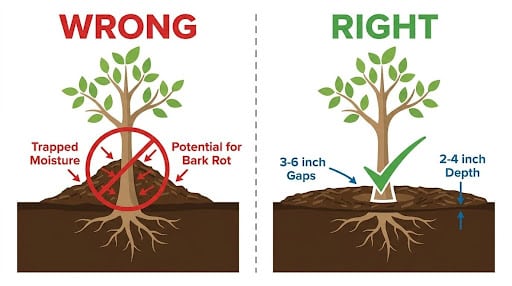
This is the most widespread and most damaging mulching mistake we encounter. Volcano mulching means piling mulch into a tall cone directly against the trunk. It looks tidy at first glance, but it creates serious problems. The constant moisture trapped against the bark promotes fungal infections and decay. It also creates a hidden highway for insects (bark beetles, carpenter ants) to access the inner wood undetected. Over time, the tree may develop adventitious roots that girdle the trunk, slowly strangling it. If your mulch looks like a volcano, pull it back immediately.
Mistake 2: Mulching Too Deep
More is not better when it comes to mulch depth. Anything beyond three to four inches starts to suffocate the soil underneath. An overly thick layer prevents rainwater from reaching the roots and reduces the oxygen exchange that roots need to function. The result is a tree that looks healthy above ground while its root system deteriorates below the surface. Aim for two to four inches, and measure before you spread.
Mistake 3: Using the Wrong Mulch Material
Not all mulch is created equal. Dyed mulches (the bright red, black, or gold varieties) are often made from recycled wood pallets or construction debris. They can leach chemicals into the soil and offer little nutritional value as they decompose. Rubber mulch, made from shredded tires, is even worse. It does not break down, releases toxic compounds as it heats up, and can increase soil temperatures rather than regulate them. Stick with natural, organic mulch products whenever possible.
Mistake 4: Not Extending Mulch Far Enough
A small ring of mulch immediately around the trunk is better than nothing, but it misses most of the root zone. A tree’s roots extend well beyond the canopy, and the most active feeder roots are near the drip line. Ideally, your mulch ring should extend to the drip line. For mature trees where that is impractical, aim for at least three to four feet out from the trunk in every direction. The wider the mulch ring, the greater the benefits.
Mistake 5: Never Refreshing or Replacing Old Mulch
Mulch is not a “set it and forget it” solution. Over time, organic mulch compacts and develops a hydrophobic crust on top. That crust repels water instead of helping retain it, defeating the entire purpose. Old, matted mulch can also harbor fungal mats and reduce airflow to the soil. Plan to fluff or turn your existing mulch at least once a year, and add a fresh layer every one to two years to maintain proper depth.
How to Mulch Around a Tree the Right Way
Learning how to mulch around a tree properly takes just a few minutes, and the technique is straightforward. Follow these steps for the best results:
- Clear the area. Remove any old, compacted mulch, weeds, and debris from around the base of the tree. This gives you a clean starting point and prevents layering problems.
- Identify the trunk flare. The trunk flare is where the trunk widens as it meets the ground. This area must remain exposed and never buried under mulch or soil.
- Create a donut, not a volcano. Spread mulch in an even ring starting three to six inches away from the trunk. Leave that gap clear so the bark stays dry and visible.
- Maintain proper depth. Apply two to four inches of mulch across the ring. Use the lower end (two inches) for finer materials and the higher end (four inches) for coarser chips.
- Extend outward. Spread the mulch as far toward the drip line as practical. For large trees, a minimum of three to four feet from the trunk is a solid target.
- Choose organic material. Native hardwood mulch, cedar, pine bark, or composted leaves are all excellent choices for North Texas landscapes.
That is it. A properly mulched tree should look like a flat donut from above, with the trunk flare clearly visible in the center. If you are unsure about your tree’s specific needs, our ISA Certified Arborists are happy to evaluate your mulch beds and recommend adjustments.
Best Mulch Types for North Texas Trees
Choosing the right mulch material matters, especially in our region’s heavy clay soils and extreme heat. Here are the top options and what to expect from each:
Native hardwood mulch is the most popular choice in DFW, and for good reason. It breaks down at a moderate pace, enriches the soil with organic matter, and holds moisture well. It blends naturally into most landscape designs and is widely available at local suppliers.
Cedar mulch offers natural insect-repellent properties, making it a great option near homes and patios. It decomposes more slowly than hardwood, so it lasts longer between applications. The trade-off is that it adds fewer nutrients to the soil over time.
Pine bark mulch is lightweight and attractive, with good moisture retention. It tends to acidify the soil slightly as it breaks down, which can benefit certain species but should be monitored on alkaline North Texas clay.
Composted leaves (leaf mold) are free if you have mature trees and a compost system. Leaf mold is excellent for soil biology, feeding earthworms and beneficial fungi. It breaks down quickly, so plan on more frequent applications.
Regardless of what you choose, avoid anything dyed, rubber-based, or sourced from unknown recycled materials.
When to Mulch in the DFW Area
The best time to apply or refresh mulch in the Dallas-Fort Worth area is late winter to early spring (February through April), before the heat sets in and while soil moisture is still relatively high. This gives your trees maximum protection heading into the brutal summer months. A second touch-up in early fall (September or October) helps insulate roots before winter temperature swings. Avoid mulching during the peak of summer when dry, compacted soil can prevent water from reaching the root zone beneath fresh material.
Protect Your Trees the Right Way
Mulching around trees correctly is one of the simplest steps you can take toward a healthier landscape. TreeNewal’s ISA Certified Arborists serve homeowners across Southlake, Keller, Colleyville, Grapevine, Flower Mound, Trophy Club, Roanoke, Argyle, North Richland Hills, Denton, Fort Worth, and Dallas. Whether you need a professional mulch assessment or a complete tree care plan, we are here to help. Call us at 469-754-9014 or visit treenewal.com to schedule a consultation.
Frequently Asked Questions
How deep should mulch be around a tree?
The ideal mulch depth is two to four inches. Anything deeper can suffocate roots by blocking water and oxygen. Use a ruler or your hand (four fingers is roughly three inches) to check depth before and after applying.
What is volcano mulching and why is it bad?
Volcano mulching is the practice of piling mulch into a high mound directly against a tree’s trunk. It traps moisture against the bark, promotes fungal decay, attracts wood-boring insects, and can cause girdling roots that eventually kill the tree. Always leave a three to six inch gap between the mulch and the trunk.
Can mulch attract termites to my trees?
Mulch itself does not attract termites, but excessively deep, moist mulch beds can create favorable conditions for them. Keeping mulch at the recommended two to four inch depth and maintaining the gap around the trunk significantly reduces this risk.
How often should I replace mulch around my trees?
Plan to fluff or turn existing mulch at least once per year and add a fresh layer every one to two years. In North Texas, heat and clay soil cause mulch to break down faster than in milder climates, so check depth regularly.
You May Also Like