Date January 08, 2026
Category
If you’ve been putting off tree pruning, January is the month to get it done. In Dallas-Fort Worth, this is the sweet spot — trees are fully dormant, their bare canopies reveal every branch in crisp detail, and the risk of spreading disease is at its lowest. Whether you’re maintaining a stately pecan in Plano or shaping crape myrtles in Southlake, January tree pruning sets the stage for a healthier, more beautiful landscape come spring.
Consider this your complete pruning guide for DFW — covering everything Dallas homeowners need to know about winter tree pruning, from which species to prune now and which to leave alone, to proper techniques that promote long-term tree health. If you’ve been searching for guidance on tree pruning Dallas homeowners can trust, you’re in the right place.
Why January Is the Best Time for Tree Pruning in Dallas
Tree pruning in Dallas follows the rhythms of our North Texas climate. January is the coldest month in the DFW area, with average highs around 55°F and lows dipping to 35°F. These temperatures keep trees in deep dormancy, which is exactly where you want them when making cuts.
Dormancy Means Less Stress
When trees are dormant, their metabolic processes slow dramatically. Pruning during this period causes far less stress than cutting during the active growing season. The tree isn’t pushing new growth or transporting nutrients, so it can dedicate resources to compartmentalizing wounds once spring arrives. For homeowners in Arlington, Grapevine, and across the Metroplex, January pruning gives trees the best chance of recovering quickly.
Clear Branch Architecture
Deciduous trees like pecans, elms, and red oaks have shed their leaves completely by January, giving ISA Certified Arborists — and observant homeowners — a clear view of the entire branch structure. Crossing branches, co-dominant stems, deadwood, and structural weaknesses that might be hidden behind a summer canopy are now fully exposed. This clarity leads to better pruning decisions.
Reduced Disease Transmission Risk
Many tree diseases in Dallas-Fort Worth are spread by insects that are far less active in January’s cold temperatures. Fungal pathogens like those responsible for oak wilt, hypoxylon canker, and anthracnose are also less likely to infect fresh pruning wounds during the dormant season. For most species in North Texas, winter tree pruning dramatically reduces the chance of introducing disease through cuts.
Which Dallas-Fort Worth Trees to Prune in January
Not all trees respond to January pruning the same way. Here’s a species-by-species guide tailored to the trees most common in DFW landscapes.
Crape Myrtles
Crape myrtles are everywhere in Dallas-Fort Worth — from Flower Mound subdivisions to Frisco shopping centers. January is an excellent time to prune them, but avoid “crape murder” — the harmful practice of topping crape myrtles by cutting all branches back to stubs. Proper pruning involves selectively removing crossing branches, suckers at the base, interior branches that impede airflow, and seedpods from the previous season. Thin the canopy rather than butchering it, and your crape myrtle will reward you with stronger branches and more abundant blooms.
American and Cedar Elms
Elm trees are staples in North Texas, and January is ideal for pruning them. With leaves gone, you can identify and remove deadwood, rubbing branches, and poorly attached limbs that could fail during spring storms. Structural pruning of young elms is especially important — establishing a strong central leader and well-spaced scaffold branches now prevents costly problems years down the road.
Pecan Trees
Pecans are icons of the Texas landscape. Homeowners with mature pecans should use January for structural pruning, deadwood removal, and thinning dense canopy areas. For younger trees, winter is the time to train proper structure by selecting scaffold branches and removing competing leaders. Because pecans are prone to heavy limb breakage during ice storms — a real concern in North Texas — removing weak attachments now is both a health and safety measure.
Red Oaks and Shumard Oaks
Red oaks and Shumard oaks are among the most valuable trees in DFW. January pruning works well because they’re fully dormant and the nitidulid beetles that vector oak wilt are largely inactive in cold temperatures. Focus on removing dead branches, correcting structural issues, and thinning the canopy. Always paint fresh cuts on oaks with wound dressing — even in winter — as an extra precaution against oak wilt. This is one of the few situations where wound sealant is actually recommended by ISA Certified Arborists.
Which Trees to Avoid Pruning in January
Live Oaks: Proceed with Extreme Caution
Live oaks deserve their own section because of oak wilt — the most destructive tree disease in Texas. While many DFW arborists traditionally prune live oaks in winter, recent research suggests oak wilt can spread even during winter months if temperatures are mild enough for nitidulid beetles to become active. In Dallas-Fort Worth, January can bring stretches of unseasonably warm weather in the 60s and 70s — enough to activate these disease-carrying beetles.
If live oak pruning is necessary in January, always paint wounds immediately with a latex-based wound dressing. Better yet, consult with an ISA Certified Arborist who understands the specific oak wilt risk level in your area. TreeNewal’s team monitors local conditions and can advise whether it’s safe to prune live oaks at any given time.
Spring-Blooming Trees Already Setting Buds
Some Dallas-area trees, particularly ornamental cherry varieties and early-blooming magnolias, may already be setting flower buds in January. Pruning them now will reduce their spring flower display. If maximum bloom is your priority, wait until immediately after flowering.
Proper Pruning Techniques: What Dallas Homeowners Should Know
How you prune matters just as much as when. ISA pruning standards exist for a reason — improper cuts cause lasting damage that compromises tree health and structural integrity.
Thinning Cuts vs. Heading Cuts
A thinning cut removes an entire branch back to its point of origin — either the trunk or a parent branch. This is the preferred method because it maintains the tree’s natural form and doesn’t trigger excessive regrowth. A heading cut removes only part of a branch, leaving a stub that responds by producing a cluster of weak, poorly attached shoots. Heading cuts are the hallmark of “crape murder” and improper topping — practices that ISA Certified Arborists consistently advise against.
The Three-Cut Method for Large Branches
When removing branches larger than two inches in diameter, use the three-cut method to prevent bark tearing. First, make an undercut about 12 to 18 inches from the trunk, cutting one-third through the branch. Second, make a top cut a few inches further out — the branch snaps cleanly between cuts. Third, make your final cut just outside the branch collar, the swollen area where the branch meets the trunk. Never cut flush with the trunk — the branch collar contains the tree’s wound-closing tissue.
What to Look for During Pruning
Whether you’re pruning yourself or watching a professional crew, here’s what should be addressed during a January pruning session:
- Dead and dying branches: Remove regardless of season — they attract pests, harbor disease, and can fall during storms.
- Crossing and rubbing branches: Friction wounds create entry points for pathogens. Remove the weaker branch.
- Co-dominant stems: Two equal stems from the same point create a weak attachment prone to splitting. Select one leader and remove the competitor.
- Water sprouts and suckers: Vigorous vertical shoots on branches and at the trunk base divert energy from primary structure.
- Storm damage: January ice storms can leave broken branches. Clean up damage promptly using proper cuts.
When to Call an ISA Certified Arborist for Tree Pruning in Dallas
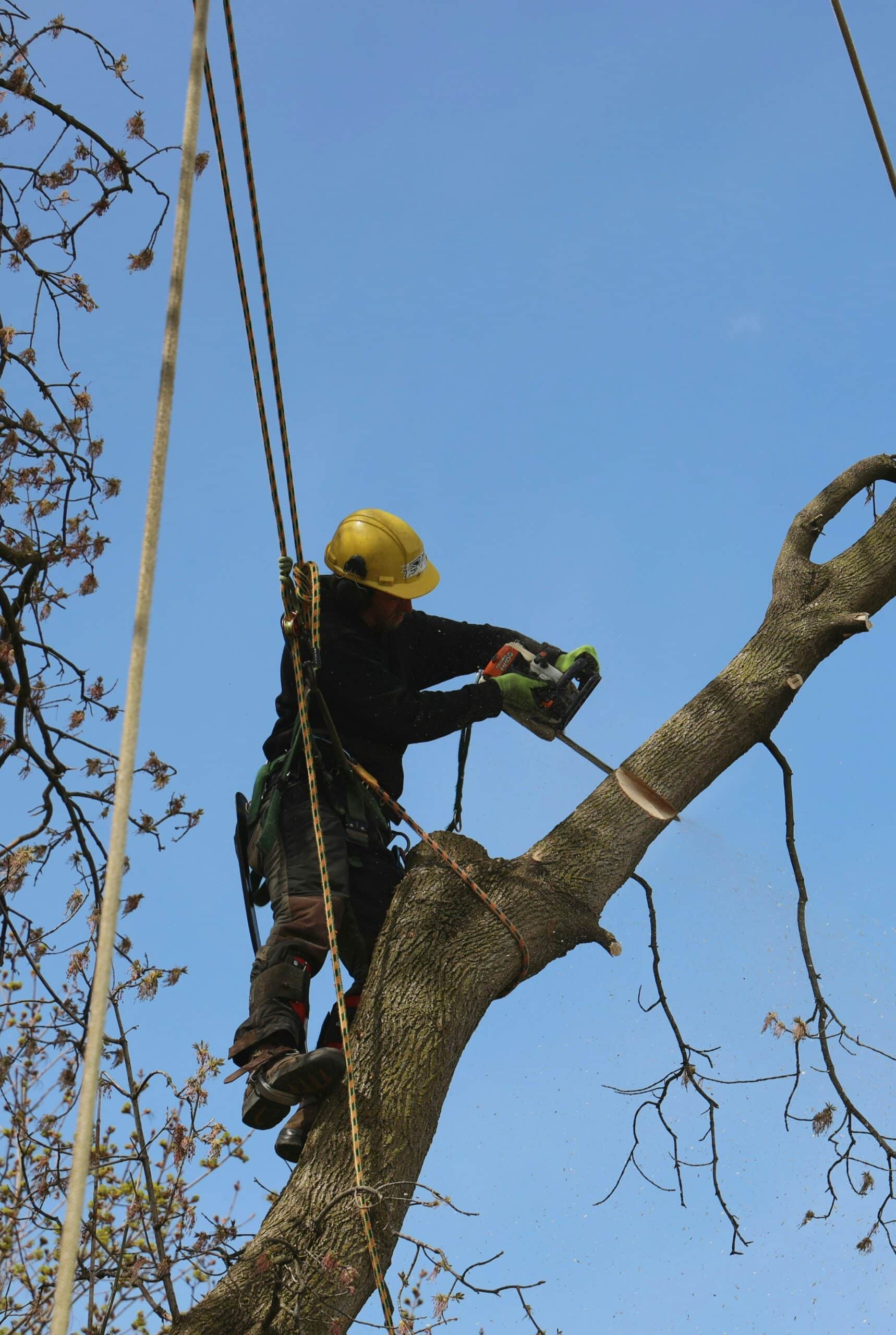
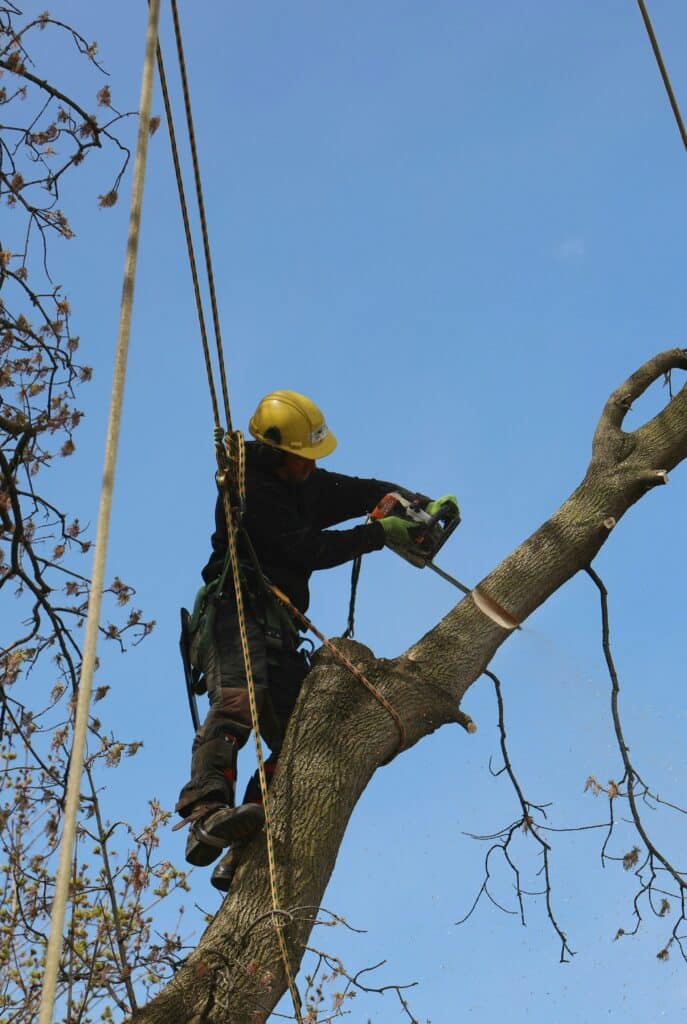
Many homeowners are comfortable pruning small ornamental trees and low branches on their own. But if pruning requires climbing, a ladder, or aerial access, it’s time to call a professional. If the tree is near power lines, structures, or fences, a professional crew with proper insurance is essential. For large shade trees — the 40-foot red oaks and towering pecans that define DFW neighborhoods from Fort Worth to Plano — professional pruning is necessary for both safety and tree health.
ISA Certified Arborists follow ANSI A300 pruning standards and understand the science behind every cut. When you hire an ISA Certified Arborist for tree pruning in Dallas, you’re getting someone who protects your trees, your property, and your investment in your landscape — not just someone with a chainsaw.
January Pruning and Ice Storm Preparedness in North Texas
Dallas-Fort Worth experiences ice storms periodically in January and February, and proper pruning is one of the best defenses against storm damage. Trees with dense, unpruned canopies catch more ice, increasing the weight load on branches and raising the risk of failure. A well-pruned tree with an open canopy allows ice and wind to pass through more easily, dramatically reducing the chance of broken limbs.
Homeowners in Southlake, Grapevine, Flower Mound, and other DFW communities surrounded by mature tree canopies should be especially proactive about storm-prep pruning. Removing deadwood, reducing end-weight on long branches, and eliminating weak attachments before the next ice event can save thousands in emergency tree removal and property repair.
Schedule Your January Tree Pruning in Dallas-Fort Worth
January offers a narrow window of ideal pruning conditions in North Texas, and the best time to act is now — before trees begin breaking dormancy in late February. Whether you need structural pruning on a mature shade tree, crape myrtle shaping, or a comprehensive plan for your entire property, TreeNewal’s team of ISA Certified Arborists is ready to help.
TreeNewal serves homeowners across the Dallas-Fort Worth Metroplex, including Southlake, Grapevine, Flower Mound, Plano, Frisco, Arlington, and Fort Worth. Our ISA Certified Arborists bring the training, equipment, and local expertise to prune your trees properly — protecting their health, beauty, and structural integrity for years to come.
Ready to schedule your January tree pruning? Call TreeNewal today at (817) 329-2450 or visit treenewal.com to request a free consultation with one of our ISA Certified Arborists.
You May Also Like