Date June 06, 2026
Category
If you live in the Dallas-Fort Worth area long enough, you will eventually see a utility line clearance crew working on the trees in your neighborhood. A truck pulls up, crews climb or use bucket lifts, and large sections of canopy are removed from any tree growing too close to overhead power lines. By the time they leave, some trees barely look like the same trees.
Most homeowners watch this happen with a mix of frustration and resignation. The trees look terrible, but the utility company has the authority to do the work, and there is not much you can do to stop it. That much is true. However, what you do after the clearance crew leaves can make the difference between a tree that recovers fully and one that spirals into decline.
Why Utility Companies Clear Trees From Power Lines
Utility line clearance is not optional. It is regulated by federal, state, and local standards that require utility providers to maintain safe clearance between vegetation and energized conductors. In Texas, Oncor and other transmission and distribution operators follow guidelines set by the National Electric Safety Code (NESC) and the North American Electric Reliability Corporation (NERC), along with their own internal clearance specifications.
The reasons are straightforward. Trees that contact power lines can cause power outages, electrical fires, and serious safety hazards. A single branch touching a distribution line during a summer thunderstorm can knock out power to an entire neighborhood. Contact with high-voltage transmission lines can be fatal.
Clearance distances vary depending on the type of line. Distribution lines (the ones running through most residential neighborhoods) typically require 10 to 15 feet of clearance, while high-voltage transmission lines may require 20 feet or more. Utility companies generally prune to achieve enough clearance to last through a three- to four-year growth cycle before the next scheduled trimming round.
This cycle-based approach means crews remove substantial amounts of canopy at once, cutting aggressively enough that the tree will not grow back into the clearance zone for several years. From a grid reliability standpoint, this makes sense. From a tree health standpoint, it creates problems.
What Utility Clearance Crews Actually Do to Your Trees
Utility line clearance is a specialized trade, and the crews are trained in electrical safety and vegetation management around energized conductors. What they are generally not trained in is comprehensive tree care.
Their job is to maintain clearance. Period. They are not evaluating the tree’s overall health, structural integrity, root condition, or long-term viability. They are cutting to a specification, and that specification is measured in feet of clearance from the wire, not in what is best for the tree.
This results in several common outcomes that ISA Certified Arborists see regularly in DFW neighborhoods:
Directional pruning that removes one entire side of the canopy. When a tree grows directly beneath or beside a power line, the clearance crew typically removes all growth on the side facing the line. The result is a tree that has a full canopy on one side and a flat wall of stubs on the other. This creates a mechanical imbalance. The weight distribution shifts to the unpruned side, increasing the risk of leaning or structural failure during high winds.
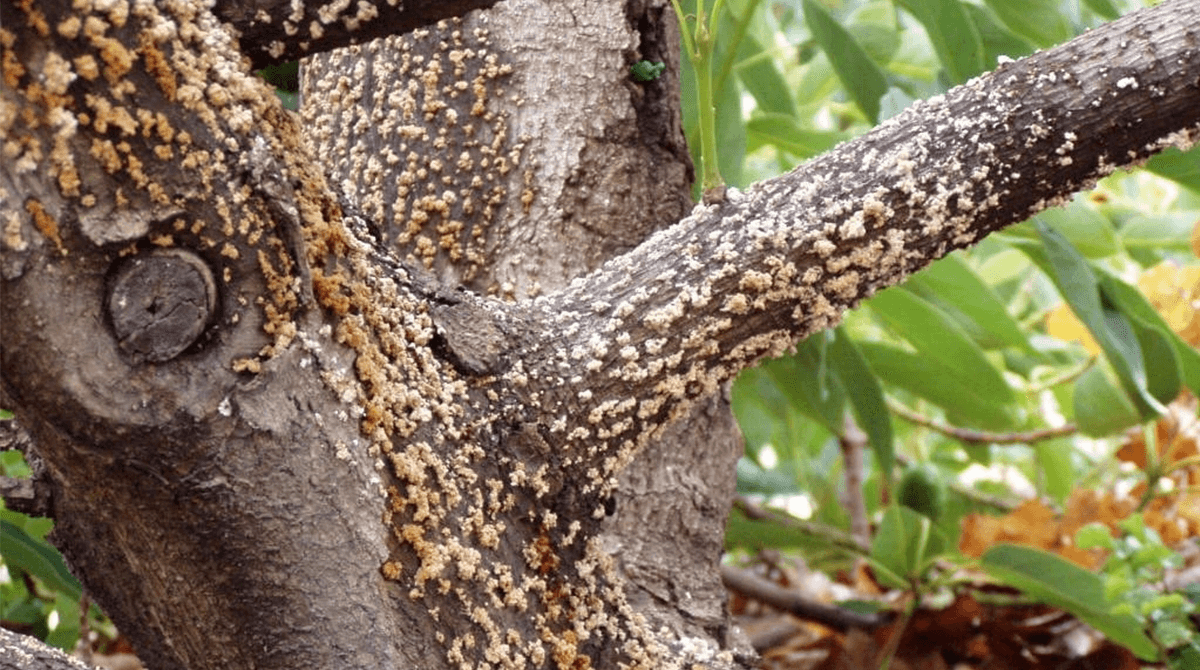
Heading cuts instead of proper reduction cuts. Utility crews frequently make heading cuts, which are cuts made in the middle of a branch rather than back to a lateral branch or the branch collar. Heading cuts leave stubs that the tree cannot effectively compartmentalize. These stubs become entry points for decay fungi, wood-boring insects, and diseases. In North Texas, stressed trees with open wounds are particularly vulnerable to Hypoxylon canker and bacterial wetwood.
Excessive canopy removal in a single visit. Because crews are pruning to a multi-year clearance cycle, they often remove 40 to 60 percent of the canopy on the utility side of the tree in one session. Removing more than 25 percent of a tree’s canopy in a single pruning event is generally considered excessive by ISA standards, as it triggers a starvation stress response and forces the tree to deplete its energy reserves to produce emergency regrowth.
No follow-up care. After the crew finishes, they move on to the next tree. There is no assessment of the tree’s health before or after the pruning. There is no plan for supplemental watering, disease monitoring, or corrective pruning. The tree is simply left to deal with the consequences on its own.
Why You Cannot (and Should Not) Stop the Work
Homeowners sometimes ask whether they can refuse to let the utility company prune their trees. In most cases, the answer is no. Utility easements, which are recorded on your property survey, give the utility provider the legal right to access and maintain clearance within the easement zone. These easements typically extend 10 to 15 feet on either side of the power line.
Even if your tree is outside the formal easement, if its branches are growing into the clearance zone, the utility company generally has the authority to prune back to the required distance. Some municipalities in the DFW area have additional ordinances that govern utility pruning, but these rarely prevent the work entirely. They may set standards for how the work is done, but the clearance itself is non-negotiable.
Attempting to prevent utility clearance can result in fines, and more importantly, it puts your property and your neighbors at real risk. Vegetation contact with power lines is one of the leading causes of wildfires and power outages nationally. The clearance work is necessary.
The question is not whether to allow it. The question is what you do after it is done.
What TreeNewal Can Do After Utility Clearance
This is where most homeowners miss an opportunity. Utility clearance crews operate on a pass-fail basis: either the clearance distance is achieved, or it is not. They are not looking at the whole tree. An ISA Certified Arborist, on the other hand, evaluates the tree as a complete living system, canopy, structure, roots, soil, and surrounding environment.
TreeNewal offers post-clearance tree health audits specifically designed for homeowners whose trees have been through utility pruning. Here is what that process looks like:
Comprehensive Health Assessment
An ISA Certified Arborist inspects the tree from the ground up, evaluating overall vitality, canopy density, leaf color and size, trunk condition, root flare visibility, and signs of pest or disease activity. The goal is to establish a complete picture of the tree’s current health, which the utility crew never had the time or mandate to consider.
Structural Evaluation
After aggressive utility pruning, the tree’s weight distribution and structural balance may be compromised. The arborist assesses whether the remaining canopy creates uneven loading, whether any remaining branches show signs of included bark or weak attachments, and whether the tree’s lean (if any) has changed. In areas of DFW that experience straight-line winds and severe thunderstorms from May through September, structural integrity is not a cosmetic concern. It is a safety issue.
Wound Assessment
Every cut made during utility clearance is a potential entry point for disease and decay. The arborist evaluates the size, location, and condition of pruning wounds, identifies any that are at high risk for infection, and determines whether corrective cuts are needed. A properly placed reduction cut at the nearest appropriate lateral branch can dramatically improve the tree’s ability to compartmentalize the wound compared to the stub that was left behind.
Corrective Pruning Recommendations
In many cases, the utility crew’s cuts can be improved with follow-up pruning. This might include:
– Converting heading cuts (stubs) into proper reduction cuts at lateral branches or branch collars
– Removing damaged or torn bark around wound sites to create clean edges the tree can seal more effectively
– Removing any deadwood or crossing branches that the utility crew ignored because they were not in the clearance zone
Plant Health Care Plan
Trees that have lost significant canopy are under stress, and stressed trees in North Texas face a long list of secondary threats: summer heat, drought, clay soil compaction, fungal diseases, and boring insects that specifically target weakened trees.
A plant health care plan addresses these vulnerabilities proactively. Depending on the tree’s species, age, condition, and site, an ISA Certified Arborist might recommend:
– Deep root fertilization to replenish nutrients and support new growth
– Supplemental watering schedules tailored to the tree’s increased needs during recovery
– Mulching to moderate soil temperature, retain moisture, and improve soil biology in the root zone
– Fungal or pest monitoring during the recovery period, when the tree is most vulnerable
– Soil aeration to address compaction, especially in older DFW neighborhoods where heavy clay and decades of foot and vehicle traffic have compacted the root zone
Long-Term Planning for Trees Near Power Lines
If your tree has been pruned by utility crews repeatedly over the years, it may be time to have a candid conversation with an ISA Certified Arborist about the tree’s long-term outlook. Some trees can sustain repeated directional pruning and continue to thrive with proper care between cycles. Others, particularly those that have been topped or had more than half their canopy removed multiple times, may be in irreversible decline.
An honest assessment might conclude that the best course of action is to continue managing the existing tree with corrective pruning and plant health care. In other cases, the arborist may recommend removal and replacement with a species that will mature at a height below the utility clearance zone, eliminating the conflict entirely.
Small-maturing species that perform well in the DFW climate and stay below typical distribution line heights include Texas redbud, desert willow, yaupon holly, and crape myrtle. Planting these species near utility corridors is a proactive strategy that protects both the tree and the infrastructure for decades to come.
Do Not Wait for the Next Clearance Cycle
Utility companies typically operate on three- to four-year pruning cycles. That means the damage from this round of clearance has three to four years to compound if no one intervenes. Decay can spread from open wounds into the trunk. Emergency regrowth (epicormic shoots) can develop with weak attachments that become hazards during storms. Stressed trees can succumb to diseases or insect infestations that a healthy tree would have resisted.
The window for effective intervention is in the weeks and months following utility clearance, not years later when the problems have become visible and potentially irreversible.
Take the Next Step
You May Also Like