Date January 14, 2026
Category
It’s January in Dallas-Fort Worth, and like millions of Americans, you’re making resolutions. Maybe you’re committed to eating better, exercising more, or finally organizing the garage. But here’s one resolution that most homeowners overlook — and it could save you thousands of dollars: hire an ISA Certified Arborist to create a professional tree care plan for your landscape.
The trees on your property are likely the largest living organisms you own. In the Dallas-Fort Worth Metroplex, mature trees can add tens of thousands of dollars to property values, reduce energy costs by up to 25 percent, and define the character of neighborhoods from Southlake to Plano. Yet most homeowners never give their trees professional attention until something goes wrong — a limb falls, a tree looks sick, or a storm causes catastrophic damage. If you’re looking to hire an arborist in Dallas who truly understands these trees, an ISA Certified Arborist changes that equation entirely.
What Is an ISA Certified Arborist Dallas Homeowners Should Look For?
The International Society of Arboriculture (ISA) is the gold standard in tree care credentialing worldwide. An ISA Certified Arborist has demonstrated, through rigorous examination, comprehensive knowledge of tree biology, diagnosis, maintenance practices, and safety. This isn’t a weekend course or a simple certificate — ISA certification requires a minimum of three years of hands-on experience, passing a comprehensive exam, and committing to ongoing continuing education to maintain the credential.
ISA Certified Arborists understand tree biology at a level far beyond what most people realize is necessary. They study vascular systems, compartmentalization of decay, root architecture, soil chemistry, and the complex interactions between trees, pests, pathogens, and their environment. Every recommendation is based on evidence and established best practices — not guesswork or outdated traditions.
In the Dallas-Fort Worth climate, this knowledge is particularly critical. Our unique combination of heavy clay soils, summer droughts, periodic ice storms, and a diverse pest and disease profile makes North Texas tree care exceptionally challenging. An arborist in Dallas-Fort Worth with ISA certification understands these local conditions and tailors care plans accordingly. When searching for a tree care consultant in DFW, ISA certification should be your first requirement.
ISA Certified Arborist vs. “Tree Guy”: What’s the Real Difference?
There is an enormous difference between an ISA Certified Arborist and the unlicensed operators who knock on your door after a storm offering to “take care of those trees.” Understanding this difference can save your trees — and potentially your home.
Training and Knowledge
An ISA Certified Arborist has invested years in professional development and maintains their credential through ongoing education. They understand the science of how trees grow, how diseases spread, and how structural failures develop. The average unlicensed operator may have experience with a chainsaw but typically lacks formal training in tree biology or pathology. This knowledge gap leads directly to practices that harm trees — topping, flush cuts, lion-tailing, and unnecessary removals.
Insurance and Liability
Reputable ISA Certified Arborists carry both general liability insurance and workers’ compensation coverage. If a branch damages your roof during pruning, or a crew member is injured on your property, proper insurance protects you from financial liability. Unlicensed operators frequently work without insurance — and if something goes wrong on your property, you could be held responsible. Always ask for proof of insurance and verify it’s current by contacting the insurance company directly.
Equipment and Techniques
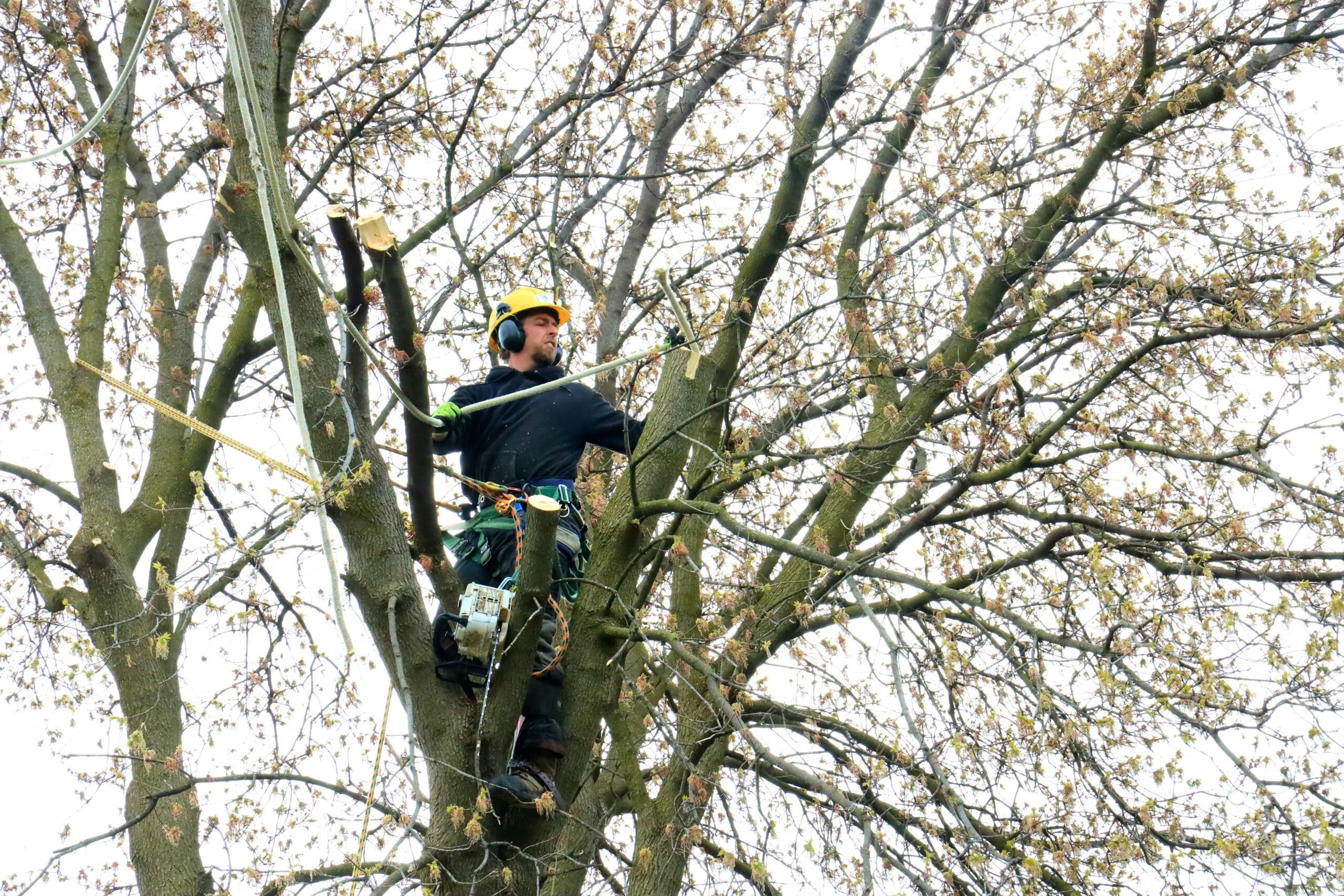
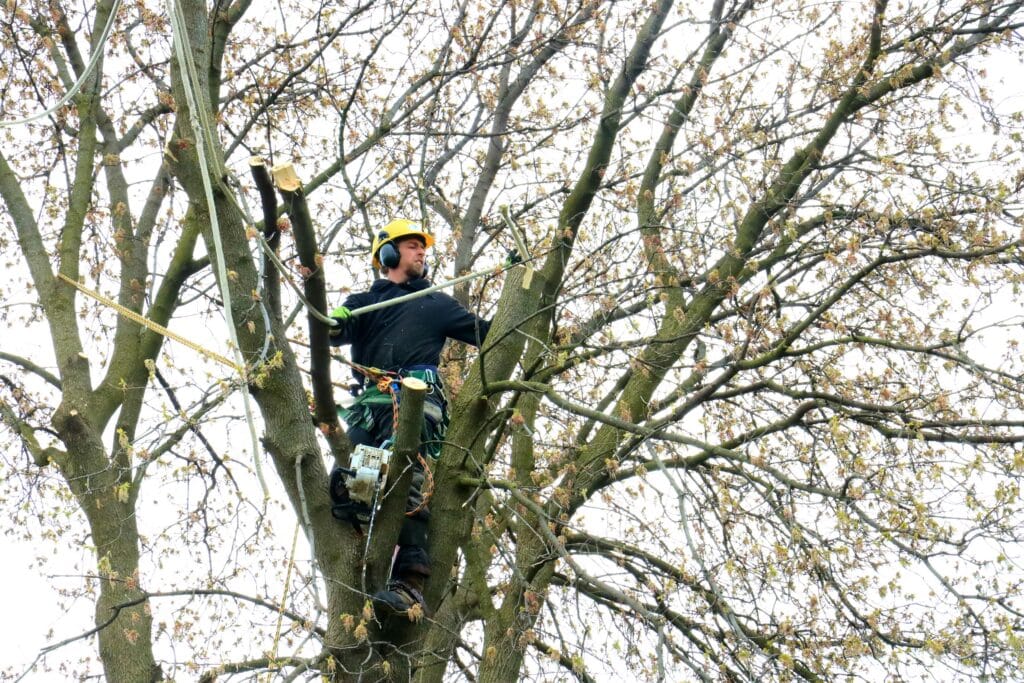
ISA Certified Arborists follow ANSI A300 standards for tree care operations, which define proper methods for pruning, cabling, bracing, and other activities. Their crews are trained in tree climbing, rigging, and aerial rescue procedures. Many unlicensed operators use improper techniques — including climbing spikes on living trees, which cause lasting damage to vascular tissue — and lack training in safe rigging practices.
What to Expect from a Professional Tree Health Assessment
Hiring an ISA Certified Arborist in Dallas-Fort Worth typically starts with a comprehensive tree health assessment — a systematic evaluation of every tree on your property.
Visual Tree Assessment
Your arborist will examine each tree from the ground up, starting with the root flare and trunk base, moving through the main trunk and scaffold branches into the canopy. They’re looking for signs of decay, cracks, cavities, fungal fruiting bodies, bark abnormalities, deadwood, co-dominant stems, insect activity, and overall health. In January — when deciduous trees are bare — this assessment is especially effective because the entire branch architecture is visible.
Root Zone Evaluation
Tree health starts underground. Your ISA Certified Arborist will examine the root zone for girdling roots, soil compaction, buried root flares, and symptoms of root rot. In Dallas-Fort Worth, where heavy clay soils expand and contract dramatically with moisture changes, root zone issues are extremely common. Many trees with canopy problems actually have root system issues caused by poor drainage, compaction from construction, or improper mulching.
Pest, Disease, and Risk Screening
Even in January, an experienced ISA Certified Arborist can identify pest and disease problems that will emerge in spring. Scale insects overwintering on bark, tent caterpillar egg masses, bark beetle exit holes, and fungal cankers are all visible during winter inspections. For trees near homes and high-use zones, your arborist will also conduct a risk assessment evaluating the likelihood and consequences of tree failure — providing actionable information about which trees need attention.
How an ISA Certified Arborist Creates a Year-Round Care Plan
One of the most valuable services an ISA Certified Arborist provides is a customized, year-round tree care plan that addresses health systematically across all four seasons.
January Through March: Dormant Season
This window is for structural pruning, deadwood removal, dormant oil applications for overwintering pests, and soil testing. Your arborist may recommend deep root fertilization to support spring growth. In Frisco, Flower Mound, and newer DFW communities where construction has compacted soils, amendment programs are especially important now.
April Through June: Spring Growth
As trees break dormancy, the plan shifts to monitoring for emerging pest and disease issues, applying targeted treatments, and adjusting irrigation. Problems identified during the winter assessment often first become visible in spring, and early intervention makes treatment more effective and less costly.
July Through September: Summer Stress
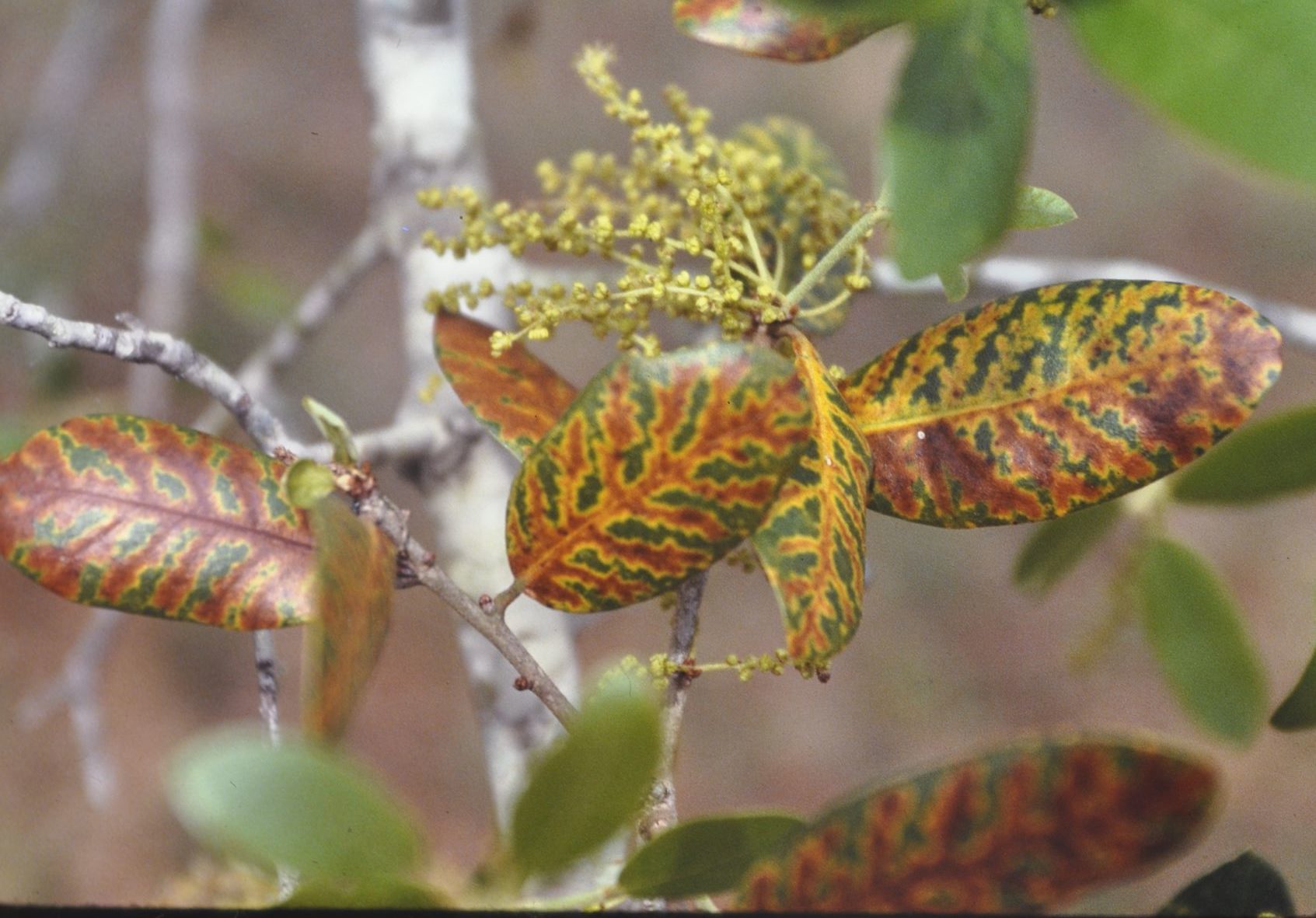
Dallas summers are brutal on trees. Your arborist’s summer plan focuses on watering guidance, mulch management, heat stress monitoring, and pest management — particularly for borers and mites attacking drought-stressed trees. This is also when your arborist monitors for oak wilt and bacterial leaf scorch.
October Through December: Fall Preparation
The focus shifts to preparing trees for dormancy: fall fertilization, evaluating structural weaknesses before winter storms, and planning the dormant-season pruning schedule for the coming January.
How TreeNewal’s ISA Certified Arborists Protect Dallas Properties
TreeNewal’s team of ISA Certified Arborists brings deep expertise in Dallas-Fort Worth’s unique challenges — from storm preparedness to disease prevention.
Storm Preparedness
North Texas ice storms can devastate unprepared landscapes. TreeNewal’s ISA Certified Arborists evaluate trees for structural integrity, identifying weak points, co-dominant stems, and deadwood. We develop storm-prep plans that include strategic pruning, cabling and bracing for high-value trees, and removal recommendations for trees posing unacceptable risks.
Disease Prevention and Management
From oak wilt to hypoxylon canker, from bacterial leaf scorch to root rot, DFW trees face significant disease pressures. Our ISA Certified Arborists use integrated pest management strategies emphasizing prevention, early detection, and targeted treatment. When disease is present, we develop plans that protect affected trees and prevent spread to neighboring specimens.
Red Flags When Hiring Tree Services in Dallas-Fort Worth
Unfortunately, the tree care industry has its share of unqualified operators. Knowing the warning signs can protect you from costly mistakes.
No Proof of Insurance
Any tree service that can’t provide proof of current general liability and workers’ compensation insurance should be disqualified immediately. Without proper insurance, you accept enormous financial risk every time a crew member steps onto your property.
Topping Trees
If a tree service recommends “topping” — the indiscriminate cutting of large branches to stubs — walk away. Topping is recognized by the ISA and every reputable arboricultural organization as one of the most harmful practices in tree care. It destroys structure, encourages weak regrowth, and increases long-term failure risk. No ISA Certified Arborist will ever recommend topping.
Door-to-Door Solicitation After Storms
After ice storms in Dallas-Fort Worth, unlicensed operators flood neighborhoods offering “emergency tree services” at bargain prices. These storm chasers typically have no insurance, no reputation, and no accountability. They perform substandard work and move on. Established companies like TreeNewal maintain a consistent community presence and stand behind their work year-round.
Using Climbing Spikes on Living Trees
Climbing spikes are designed for trees being removed. Each spike wounds the vascular cambium, creating entry points for pests and disease. Using spikes on trees being preserved is a clear sign of improper training. ISA Certified Arborists never use climbing spikes on trees being maintained.
No Written Estimate
Professional tree care companies provide detailed written estimates specifying exactly what work will be performed, how debris will be handled, and the total cost. Verbal agreements and vague descriptions are red flags suggesting an unprofessional operation.
Make This the Year You Invest in Your Trees
Your trees are among the most valuable assets on your property — financially, aesthetically, and environmentally. A professional care plan created by an ISA Certified Arborist is one of the smartest investments a Dallas homeowner can make, preventing costly emergencies and ensuring your trees remain healthy for decades.
TreeNewal’s ISA Certified Arborists serve homeowners throughout the Dallas-Fort Worth Metroplex, including Southlake, Grapevine, Flower Mound, Plano, Frisco, Arlington, and Fort Worth. This January, start the year with a professional tree health assessment — and build a care plan that protects your trees through every season.
Call TreeNewal today at (817) 329-2450 or visit to schedule your consultation with an ISA Certified Arborist. Your trees will thank you.
You May Also Like