Date February 13, 2026
Category
If you have been putting off tree trimming this winter, February is your final opportunity to get it done before the spring growth season begins in earnest across North Texas. Once buds break and new leaves start to emerge — which can happen as early as late February for some species in the Dallas-Fort Worth area — the window for ideal dormant-season trimming closes. Trees that are trimmed after they have already invested energy into new growth face a setback, and the benefits of dormant pruning are largely lost.
February tree trimming in North Texas is not just about timing, though. It is about strategy. This is the month to address structural issues, remove hazards, and shape your trees for a strong, healthy growing season ahead. TreeNewal’s ISA Certified Arborists work with homeowners across Southlake, Grapevine, Flower Mound, Plano, Frisco, Arlington, Fort Worth, and the broader DFW metroplex to ensure that late winter trimming is performed correctly, protecting both the health of the tree and the safety of your property.
Why February Tree Trimming Matters for Dallas-Fort Worth Trees
The Biology Behind Dormant-Season Trimming
Trees store energy in their roots and trunk throughout the winter in preparation for the explosive growth that occurs in spring. When you trim a tree during dormancy — before it has begun channeling that stored energy into bud development and leaf production — the tree loses very little of its energy reserves. The pruning wounds occur on wood that is essentially in a holding pattern, and the tree can begin compartmentalizing those wounds and directing growth to the remaining branches as soon as spring arrives.
Trim that same tree after buds have already broken, and the equation changes dramatically. The tree has already committed significant energy to growing those buds and expanding new leaves. Removing branches at that point wastes that energy investment and forces the tree to redirect resources, resulting in a stress response that can weaken overall health. In the Dallas-Fort Worth climate, where summer heat and periodic drought already place heavy demands on trees, starting the growing season from a position of strength rather than stress is critical.
Better Visibility, Better Results
Another major advantage of February tree trimming in North Texas is visibility. With most deciduous trees still bare or nearly bare, arborists can clearly see the entire branch structure. This allows for more precise pruning decisions — identifying crossing branches that will rub and create wounds, spotting weak branch unions that are prone to splitting, and recognizing deadwood that needs to be removed. Once the canopy fills in with leaves, many of these structural issues become hidden, and pruning becomes less targeted and less effective.
Which Trees to Prioritize for Late Winter Trimming
Shade Trees: Structural Pruning for Storm Resistance
Large shade trees — including elms, pecans, ash, sycamores, and non-oak hardwoods — should be at the top of your February trimming priority list. These are the trees that provide the most value to your property in terms of shade, aesthetics, and energy savings, but they are also the trees that pose the greatest risk if they are not properly maintained. A single large limb failure during a spring thunderstorm can cause tens of thousands of dollars in damage to your home, vehicle, or fence.
February is the time for structural pruning on these shade trees: removing co-dominant leaders that create weak branch unions, thinning dense interior canopy areas to reduce wind resistance, and raising the canopy by removing lower limbs that interfere with walkways, driveways, and structures. In DFW neighborhoods from Arlington to Plano, properly pruned shade trees are not only safer but also develop stronger, more attractive form over time.
Crape Myrtles: How to Trim Without Committing Crape Murder
No discussion of February tree trimming in North Texas would be complete without addressing crape myrtles — and the unfortunate practice known as crape murder. Every winter, countless crape myrtles across the Dallas-Fort Worth area are butchered by well-meaning homeowners and inexperienced crews who hack the trees back to ugly, knobby stubs. This practice is not only aesthetically devastating but also harmful to the long-term health and structure of the tree.
Proper crape myrtle trimming in February involves a restrained, thoughtful approach. Here is what it actually looks like:
- Remove suckers and low-growing shoots from the base of the trunk and along the lower portion of the main stems.
- Thin out interior crossing branches to improve air circulation and reduce disease pressure.
- Remove seed pods from the tips of last year’s growth if desired, but this is purely cosmetic and optional.
- Cut back only pencil-diameter or smaller branches at the tips. Never cut major limbs back to stubs.
- Preserve the natural form of the tree. A well-pruned crape myrtle should look like it was barely touched, not like it was attacked with a chainsaw.
If your crape myrtle has been topped or crape-murdered in previous years, an ISA Certified Arborist can help develop a multi-year restoration plan to gradually rebuild a healthy, natural canopy structure. It takes patience, but the results are dramatically better than continuing the cycle of severe annual topping.
Fruit Trees: Setting Up a Productive Season
For homeowners in the DFW area who grow peach, plum, pear, fig, or other fruit trees, February trimming is essential for a productive harvest. Fruit trees benefit from annual pruning that maintains an open center or modified central leader form, allowing sunlight to penetrate the interior of the canopy and air to circulate freely. Both of these factors directly impact fruit quality and reduce the risk of fungal diseases.
February is the ideal window because you can see the branch structure clearly and make your cuts before the tree pushes energy into flower buds. For peach and plum trees in North Texas, which often begin to show flower buds in late February, acting early in the month is especially important. Pruning after flower buds have opened removes potential fruit and wastes the tree’s energy investment.
The Critical Oak Trimming Exception
While February is generally the last chance for dormant pruning, there is one major exception that every Dallas-Fort Worth property owner needs to understand: oak trees should not be trimmed from February through June. The Texas A&M Forest Service issues this recommendation because of oak wilt, a devastating fungal disease that is spread by nitidulid beetles. These beetles are attracted to fresh pruning wounds on oaks, and they become active as temperatures warm in late winter and spring.
If you have oak trees that need pruning, the safest windows are midsummer (July through September, when beetle activity drops) or late fall through January. If emergency pruning on an oak is absolutely necessary during the February-through-June restriction period — for example, a storm-damaged limb that poses an immediate hazard — the pruning wounds must be painted immediately with a wound sealant. This is one of the very few situations where wound paint is recommended, as its purpose is to prevent beetle access to the fresh wound rather than to help healing.
TreeNewal’s ISA Certified Arborists can help you determine whether any oak pruning needs on your property constitute a genuine emergency or whether they can safely be deferred to a lower-risk period.
Why You Should Never Top Your Trees
Tree topping — the practice of cutting major branches back to stubs or reducing the height of a tree by indiscriminately removing large portions of the crown — remains one of the most common and most damaging tree care mistakes in the Dallas area. Despite decades of education efforts by the arboricultural community, topping continues, often performed by unqualified crews who advertise cheap tree trimming services.
The Damage Topping Causes
Topping creates large wounds that the tree cannot effectively compartmentalize. These wounds become entry points for decay fungi, which can colonize the trunk and major branches and weaken the entire tree from the inside out. The vigorous sprout growth that follows topping — often cited by proponents as proof that the tree is “fine” — is actually a desperate stress response. These sprouts are weakly attached to the decaying stub they grow from and are far more prone to breaking than properly attached branches. In effect, topping a tree to reduce risk actually increases risk significantly over time.
What Proper Trimming Looks Like
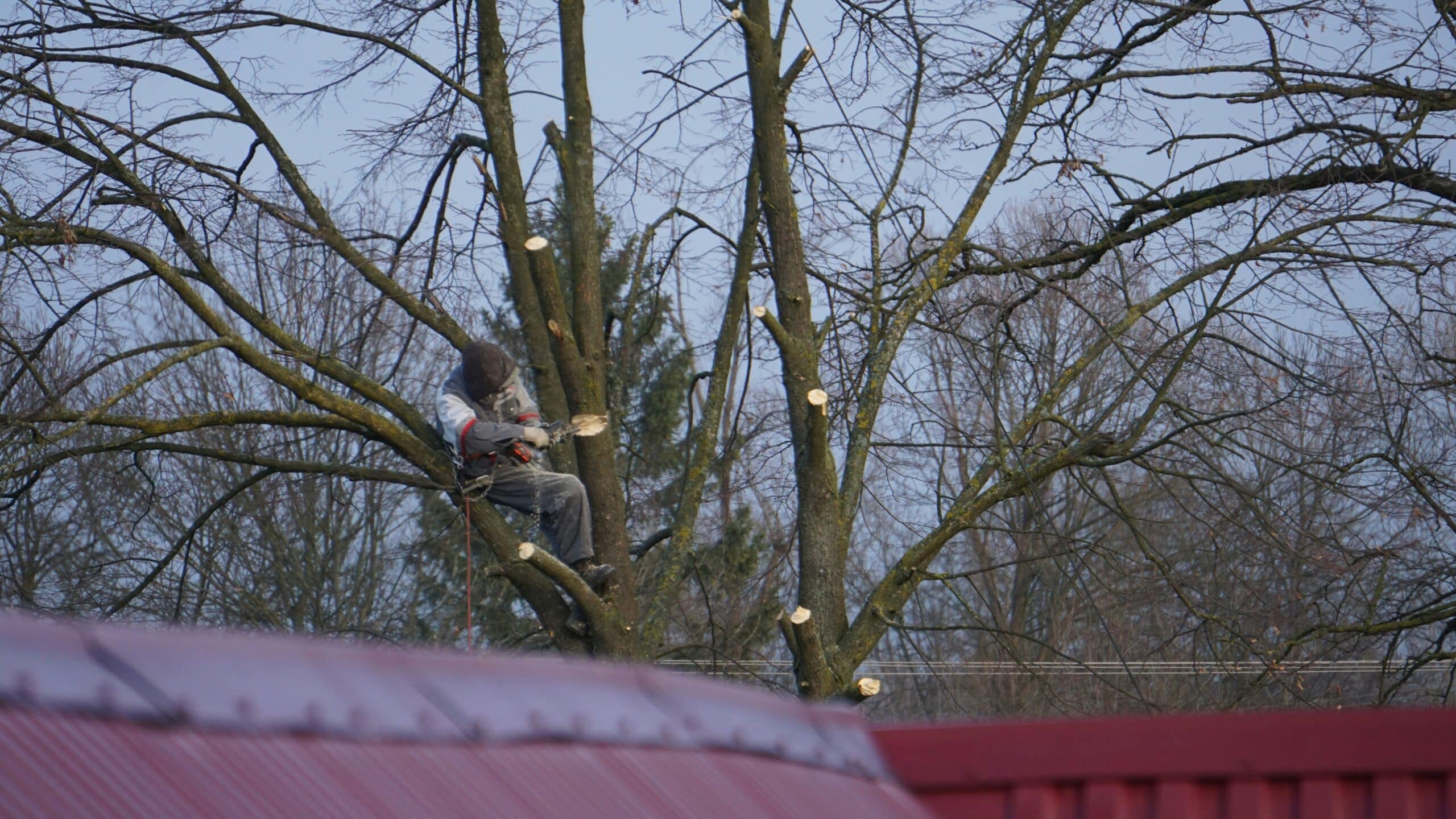
Proper tree trimming follows established arboricultural standards. Branches are removed at appropriate points — either back to the trunk (using a proper three-cut technique that protects the branch collar) or back to a lateral branch that is large enough to assume the terminal role, a technique called reduction cutting. The result is a tree that maintains its natural form, compartmentalizes pruning wounds effectively, and grows stronger over time rather than weaker.
If your goal is to reduce the height or spread of a tree, an ISA Certified Arborist can achieve meaningful size reduction through proper reduction cuts without resorting to topping. In some cases, the honest assessment may be that the tree is simply too large for the space and removal and replacement with a more appropriately sized species is the best long-term solution. A qualified arborist will give you that honest evaluation rather than just topping the tree and cashing a check.
Clearance Trimming Before Spring Storm Season
February is also the ideal time for clearance trimming — removing branches that overhang roofs, press against siding, encroach on power lines, or block walkways and driveways. In the DFW area, spring storm season typically kicks off in March and continues through May, bringing strong winds, hail, and heavy rain. Branches that are in contact with your home or other structures act as battering rams during high winds, grinding against roofing materials, siding, and gutters and causing cumulative damage.
Clearance trimming performed in February gives you the full spring and summer season with proper separation between your trees and your structures. For neighborhoods throughout North Texas — from the established tree canopies of Fort Worth and Arlington to the maturing landscapes of Frisco and Flower Mound — this simple preventive step can save significant repair costs and protect both your property and your family.
Schedule Your February Tree Trimming with TreeNewal
The window for dormant-season tree trimming in North Texas is closing fast. Once spring growth begins, the advantages of late winter trimming are lost, and you will be waiting until next year for another opportunity. TreeNewal’s ISA Certified Arborists serve homeowners throughout the Dallas-Fort Worth metroplex, including Southlake, Grapevine, Plano, Frisco, Arlington, Fort Worth, and surrounding communities. We provide expert pruning that follows industry best practices, protects your trees’ health, and keeps your property safe.
Call TreeNewal today at (817) 329-2450 or visit treenewal.com to schedule your late winter tree trimming before the spring rush begins. Your trees — and your property — deserve expert care.
You May Also Like